
In part 1, part 2, and now part 3 I explore how the work of psychologists and other social scientists can help us understand why people might reject affirmative action as did the Supreme Court justices in the recent ruling. A deeper understanding would come from recognizing the role of history as a psychological process that can influence judgments of justice and fairness. Specifically, individuals and groups have historical narratives that shape perceptions of justice and fairness and their judgments of affirmative action.
How history could enrich the psychology of social justice
Aside from acknowledging that contemporary events affect the topics that social scientists choose to study, how can they incorporate history into their research and theory on social justice? A deeper understanding of the reactions to affirmative action requires that psychological research and theory address the historical context and the impact of this context on fairness perceptions. The individual’s perceptions of history seem likely to affect his or her judgments of justice and fairness as much or more than the variables typically identified in previous work as sources of distributive, procedural, interpersonal, and informational justice. In short, history can constitute a psychological process in which “groups construct their histories” (see Bikman, Torrance & Krumholtz, 2018). These historical narratives then shape how individuals identifying with the groups judge the fairness of their situation.
 Psychologists have provided insight into how people judge justice and fairness and ways of increasing perceptions of justice and fairness, but much of this work ignores history. An example is an experiment conducted by Alex Shaw and Shoham Choshen (2017). They were concerned with perceptions of fairness and in particular advantageous inequity aversion (i.e., the avoidance of receiving more than one deserves compared to others) and disadvantageous inequity (i.e., the avoidance of receiving less than one deserves compared to others). To test folk beliefs about these inequities, the researchers presented participants with a scenario in which an alien species (Knobies) had one of the two types of aversion but not the other. They predicted and found that Knobies who only were averse to advantageous inequity were judged to be more concerned about fairness than the Knobies who were only averse to disadvantageous inequity.
Laboratory experiments like this intentionally strip away ties to history to identify universal, generalizable patterns of findings, and they often yield interesting and valuable insights. But when psychologists descend the ladder of abstraction and attempt to apply their concepts to specific situations, they are more likely to succeed if they consider the historical context. It is possible that previous research findings apply mainly to ahistorical situations where the person is a blank slate and judges fairness with no conception of how fair things were in the past.
Where the person judging justice and fairness comes to the task with historical knowledge, a much different dynamic may occur. People typically have a past in mind when they react to affirmative action. In part this is a personal past. For instance, those who have personally experienced discrimination are more positive toward affirmative action than those who have not (Harrison et al, 2006).
Each of the groups that have been the primary beneficiaries of affirmative action as well as groups that believe they are victims of affirmative action has a story to tell about past and ongoing oppression.
African Americans were enslaved from 1619 to 1865 and then subjected to 100 years of apartheid in the Jim Crow South and 100 years of discrimination and segregation in much of the rest of the country.
The physical and cultural genocide of Native Americans reduced them to an impoverished, dislocated, and segregated class of people. Women were disenfranchised, barred from employment, educational and financial opportunities, and treated as sex objects.
Mexican Americans were lynched, treated as illegal aliens, and exploited as cheap labor. Chinese were excluded from entering the United States and anti-miscegenation laws in some states prohibited them from marrying white people.
Japanese Americans were sent to concentration camps in World War II. The plaintiffs in the recent Supreme Court case were Asian Americans who believed affirmative action has excluded them because of their high standardized test scores.
LBGTQ people tell stories of a long history of bias that forced them to hide their sexual identities and prevented them from marrying the ones they loved and becoming parents.
Jews can point to a history of antisemitism that created barriers in employment and education. Thousands died in the holocaust because they were blocked from entering the U. S. by racist immigration policies. Not long ago, major universities and colleges used quotas to limit Jewish enrollment.
White men also claim a history of oppression, despite the large gaps in socioeconomic status that favor them. Some believe that they have had to struggle for their positions in society but have been punished for their success as priority is given to minorities and women.
Professional historians will need to assess the validity of the narratives, but there is no doubt that these stories exist, contextualize judgments of fairness, and shape how people react to affirmative action. As James Baldwin famously said, “History is not the past…It is the present. We carry our history with us. We are our history.”
The Stories We Tell.
 Much of the early work on social justice and especially equity theory presumed that people are like accountants. They rationally assess their inputs and outcomes and then look for comparisons in judging the fairness of the distribution of resources. If their ratio of inputs to outcomes is equal to the ratio of inputs to outcomes of the comparison persons, then the distribution is fair. But if the ratio suggests that they are receiving more or less than they are contributing, they judge the distribution as unfair.
It is now clear that people are not that deliberate and rational in judging what’s fair. In everyday life we often reach these based on intuitive hunches rather than careful, reasoned, evidence-based deliberations (Lerner & Goldberg, 1999; Haidt, 2012). Psychologists have proposed that people carry around cognitive shortcuts in their heads that allow them to reach decisions quickly and effortlessly. They are most often called heuristics, but we could also call them narratives, stories, schemata, or representations. We are often not even aware of heuristics, but they allow us to cut through the mass of information that surrounds us in even the simple decisions in life. Take, for example, a typical trip to the grocery store. Confronting a vast array of different brands, the consumer draws on hunches about the options and makes a purchase guided by a heuristic drawn from personal experiences, the experiences of others, and advertising. Similarly, people have fairness heuristics that help them decide whether a situation is just or unjust.
Psychologists claim that the six most frequently used heuristics in judgments of justice and fairness are the ones I have discussed here – distributive, procedural, interpersonal, informational, retributive, and restorative justice. I suspect, however, that a more powerful heuristic derives from the personal history of individuals in combination with the historical narrative associated with the groups with which they identify. Indeed, for a group of people to share a positive, coherent definition of who they are (i. e., a social identity) is not even possible without a grounding in the history of the group (see Jetten & Wohl, 2012). They could be white, Christian, southerners, or Americans, to name only a few of the groups that provide the basis for social identity. We can discern at least two historical narratives in the majority and dissenting opinions that the Supreme Court justices stated in the recent affirmative action case.
One narrative is commonly associated with support for affirmative action. In the beginning the founders of the United States sought to protect and preserve slavery. Indeed, the wealth of the Nation, North and South, was built on slavery. Emancipation came after a bloody civil war, but segregation, discrimination, and racist violence soon followed and blocked the social-economic advancement of African Americans. Opportunities in employment, housing, education, and health care fell far below the opportunities enjoyed by the white majority. The Civil Rights legislation of the 1960s was a start but it has not solved the ongoing racial gaps.
This is the narrative that underlies the dissenting opinion of Supreme Court Justice Ketanji Brown Jackson when she states that “History speaks. In some form, it can be heard forever. The race-based gaps that first developed centuries ago are echoes from the past that still exist today. By all accounts, they are still stark.” In a society with deeply entrenched systemic racism, affirmative action is needed to ensure that African Americans have equal opportunities and to level the playing field. Thus, the United States is not without sin and can only progress if past wrongs are righted.
Another narrative is associated with opposition to affirmative action and underlies the majority opinions in the recent Supreme Court decision. It is the story of a nation that is exceptional because of the virtue, bravery, and nobility of its people. Moreover, it is a colorblind society, where the government treats all people regardless of race, religion, national origin, or sex as equals. When the nation has strayed from this founding principle, it is mostly due to a few bad apples and steps are inevitably taken to put things back on the right course. Slavery and Jim Crow were deviations from the true nature of the nation, but they were aberrations that have now been corrected. With the passage of the Civil Rights Act of 1964 and other civil rights legislation at the Federal and state levels, as well as the election of Obama, the Nation has remedied its past mistakes. We no longer need affirmative action and the myriad of Federal laws (e.g., Voting Rights Act, Fair Housing Act) that attempt to remedy the harm of past discrimination. The nation should not look back at the mistakes of the past but instead move on based on the fundamental American principle of colorblindness. In keeping with this principle, the law should only address discrimination against individuals, not racial classes.
Justice Clarence Thomas in his concurring opinion appears to follow this narrative. He criticizes Justice Jackson for her beliefs that “we are all trapped in a fundamentally racist society with the original sin of slavery and the historical subjugation of black Americans still determining our lives today” and that the only solution is to “reallocate society’s riches by racial means as necessary to ‘level the playing field’.” According to the narrative, any consideration of race, sex, etc. or systemic prejudice is a moral and legal violation of our fundamental principles.
How groups represent their history and how these representations affect the attitudes and behaviors of individuals who identify with these groups have received increasing attention from social psychologists (see Bikmen, 2015; Liu & Hinton, 2005). But little if any attention has been given to individual differences in perceived fairness, including how historical narratives influence these judgments. I would venture a hypothesis: In judging the fairness of affirmative action, narratives such as these serve as heuristics that swamp the effects of procedural, distributive, interactional, and informational justice. Narratives are so powerful because they shape social identity. According to Liu and Hinton (2005), “History provides us with narratives that tell us who we are, where we came from and where we should be going. It defines a trajectory which helps construct the essence of a group’s identity, how it relates to other groups, and ascertains what its options are for facing present challenges” (p. 537). To the extent that the promotion of or opposition to affirmative action conflicts with a cherished historical narrative it is seen as unjust not only because it violates a specific norm (e.g., equity, procedural justice) but also because of a threat to the social identity associated with the narrative.
Must Historical Truth Always Hurt?
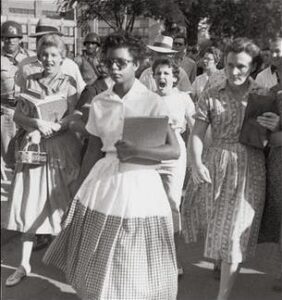 Historical accounts can provide people with narratives that not only shape how they judge fairness but also how they cope with what they believe are injustices. An interesting illustration of this was an experiment in which African American students were provided with one of two accounts of the integration of a Little Rock Arkansas high school in the 1950s (Bikmen, 2015). One account was titled “African American Education: A History of Resilience” and described not only the discrimination experienced by the first nine African Americans who attended the previously all white school but also their resilience and subsequent success in life. The second narrative, titled “African American education: A history of exclusion,” focused on the discrimination faced by both these nine students and all African Americans as they attempted to obtain an education. A control condition read a narrative about the Berlin Wall, which was under construction about the time of the Little Rock school integration. Among those students for whom being Black was an important part of their self-image, the resilience narrative led to higher performance than did the exclusion and control narratives on a subsequently administered verbal aptitude exam. A similar pattern of results was found for women who read narratives that described the historical struggles of women scientists and then took a math exam. Those for whom gender was central to their self-image performed better on a math exam after reading a narrative that depicted the resilience of women scientists in their struggles against discrimination than did those who read a narrative that stressed the exclusion of women from science. These findings, as well as other research showing the powerful influence of historical narratives, provide support for including historical narratives in the psychological research on how people judge the fairness of affirmative action.
What I am suggesting here is akin to an applied historical psychology. A melding of history and psychology might help reconcile the current controversies what is taught about American history in public schools. Right-wing critics argue for the omission or softening of the wrong doings that are part of this history while those on the left argue that students need to know about slavery, the treatment of Native Americans, and other sins against minority groups. There is some merit to both sides of this argument. Personally, I lean more toward the left-wing argument that we must confront the evils of the past rather than pretending they did not happen. But while an overemphasis on the positive poses obvious risks, one should not ignore the potential harm from an overemphasis on the negative as well.
But how do we accurately convey the shortcomings of America without miring the reader in a slough of despair, cynicism, and anger? The effects of content on the consumers of historical narratives are rarely assessed. What feelings do they evoke? Do readers experience hostility, depression, self-esteem, resentment, inspiration, or some other positive or negative emotion? How do these narratives affect their political beliefs or intentions? And perhaps more relevant to this discussion, how do they affect perceptions of affirmative action and other efforts to remedy past discrimination? Of course, there are dangers in engineering a historical narrative to achieve a particular outcome. Most professional historians would rightly protest that they must tell the truth, and any distortion of the facts to meet a particular end (e.g., boosting the self-esteem of whites by minimizing slavery), would be unethical. And they are right in saying this. A middle ground is to confront these sins without sugar coating but provide stories of victims who fought back, the heroes who led them in the resistance, and those who overcame oppression. Thus, history contributes to psychology, and psychology contributes to history.
References
Bikmen, N. (2015). History as a resource: Effects of narrative constructions of group history on intellectual performance. Journal of Social Issues, 71(2), 309-323.
Bikmen, N., Torrence, M. A., & Krumholtz, V. (2018). The importance of knowing your history: Perceiving past women as less agentic than contemporary women impaired quantitative performance. Sex Roles, 79, 621-632.
Doosje, B., Brancombe, N., Spears, R., & Manstead, A. S. R. (1998). Guilty by association: When one’s group has a negative history. Journal of Personality and Social Psychology, 75, 872–886.
Gergen, K. (1973). Social psychology as history. Journal of Personality and Social Psychology, 26(2), 309-320.
Haidt, J. (2012). The Righteous Mind: Why Good People are Divided by Religion and Politics. New York: Knopf Doubleday.
Harrison, D. A., Kravitz, D. A., Mayer, D. M., Leslie, L., & Lev-Arey, D. (2006). Understanding attitudes towards affirmative action programs in employment: Summary and meta-analysis of 35 years of research. Journal of Applied Psychology, 91(5), 1013-1036.
Holmes, O., IV, Jiang, K., Avery, D. R., McKay, P. F., Oh, I.-S., & Tillman, C. J. (2021). A meta-analysis integrating 25 years of diversity climate research. Journal of Management, 47(6), 1357–1382.
Hout, M. (2021). America’s liberal social climate and trends: Change in 283 General Social Survey variables between and within U.S. Birth Cohorts, 1972–2018. Public Opinion Quarterly, 85(4), 1009-1049.
Jetten, J. & Wohl, M. (2011). The past as a determinant of the present: Historical continuity, collective angst, opposition to immigration. European Journal of Social Psychology, 42, 442-450.
Lerner, M. J., & Goldberg, J. H. (1999). When do decent people blame victims? The differing effects of the explicit-rational and implicit-experiential cognitive systems. In S. Chaiken & Y. Trope (Eds.), Dual-process theories in social psychology (pp. 627–640). New York: Guilford Press.
Liu, J. H. & Hilton, D. J. (2005). How the past weighs on the present: Social representations of history and their role in identity politics. British Journal of Social Psychology, 44, 537-556.
Mandler, P. (2019). The language of social science in everyday life. History of the Human Sciences, 32(1), 66–82.
Menu: