
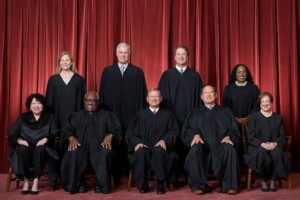
In a decision handed down June 29, 2023, the U. S. Supreme Court ruled that affirmative action is a violation of the Fourteenth amendment of the constitution and can no longer be used as a basis for admission (Students for Fair Admissions, Inc. (SFA) v. President and Fellows of Harvard; SFA v. University of North Carolina). The ruling focused on college admissions policies at Harvard University and University of North Carolina but is expected to affect attempts to increase diversity in employment and other settings. The decision has sparked a firestorm, with those on the right praising the demise of affirmative action and those on the left denouncing the Supreme Court for turning back the clock on civil rights. The decision is not the final word on the issue. Affirmative action as we know it is dead, but the commitment to increase racial and ethnic diversity lives on. Many more court fights are sure to follow as academic institutions and employers struggle to increase diversity in a way that is fair and compliant with the law.
The focus of this posting and part 2 and part 3 that follow is affirmative action. The issue illustrates the potential intersections of psychology and history in dealing with two fundamental questions. What do people perceive to be a fair distribution of resources, opportunities, and outcomes in a society with a history of past injustices that favored some groups over others? How do they perceive efforts to remedy the harm done to a group that suffered past discrimination? This posting and the next two address the psychology of affirmative action, not whether the Supreme Court was right or wrong in rejecting affirmative action. Philosophers and legal scholars have long debated what constitutes a just society. These postings have little to add to their arguments and will instead deal with the perceptions of fairness. I do have strong opinions, and it will not be hard for the reader to ascertain my biases. But the intent in this blog is not to advertise my feelings about the issue but instead to examine what psychologists contribute to an understanding of fairness judgments and how history can enrich this understanding.1
Psychological research and theory on social justice can help us understand why people react as they do to affirmative action. And, in keeping with the theme of this blog, a melding of history and psychology can enhance our understanding of social justice perceptions. This first of three posts provides some background information about affirmative action and the interplay between the area of social justice in the social sciences and history. The second post reviews what psychologists have identified as the primary bases for judging fairness and uses the recent Supreme Court ruling to illustrate. The third post addresses how taking history into account can enrich our understanding of the resistance to affirmative action and why an applied historical psychology might help in the continuing efforts to deal with past injustices.
How the social sciences have influenced history
Kenneth Gergen (1973) authored a provocative essay titled Social Psychology as History in which argued against the view of social psychology as a dispassionate science that stands apart from historical events and can identify laws of human behavior that generalize across time. Instead, history and the study of social interactions are intertwined. History influences social psychology and in turn, social psychology influences history.
The social sciences, including psychology, have provided constructs and theories to explain what were attributed in the past to spirits, demons, and other supernatural forces or the moral character of individuals. They have led to a recognition of the importance of social institutions in shaping human behavior and pointed the way to interventions to improve human welfare. By infiltrating the discussions of policy makers and the public, psychology has shaped language and directed attention to social problems, their causes, and potential solutions. Terms originating in the first half of the 20th century from the work of psychologists and other social scientists include relative deprivation, self-fulfilling prophecy, ethnocentric, gender roles, comparable worth, stereotype, norms, empathy, narcissism, IQ, stress, placebo effect, risk-averse, identity, implicit prejudice, and more (see Mandler, 2019).
In part because psychology and the other social sciences have given the public a vernacular with which to think and talk about fairness, the work in these areas has increased sensitivity to injustices and has helped fuel some of the major social movements of the last century. Psychology and the social sciences in general also influence history because they are prescriptive as well as descriptive. In other words, they not only generate knowledge about what is but also what should be. The research of psychologists and other social scientists is widely disseminated on TV, radio, and across the internet and can over time shape fundamental values. For example, the work on sex roles to some extent liberated men and women from the straitjackets that traditional sex roles imposed on them. Over the last fifty years, discrimination, stereotyping, and prejudice have become major areas of research for psychologists, and the findings of their work are at least partially responsible for the large shift toward liberal values among white Americans including the increased acceptance of LBGTQ people, African Americans, and nontraditional sex roles (Hout, 2021).
The net effects of social science research may have been to move the public in a liberal direction on important values and attitudes, but the right-wing as well as the left-wing has used the findings of social science research to bolster their respective ideologies. We see the influence of psychology and other social sciences in the majority and dissenting opinions of the recent affirmative action case (Students for Fair Admissions, Inc. (SFA) v. President and Fellows of Harvard; SFA v. University of North Carolina). Both sides cite findings from social science research to prove their points. Chief Justice Roberts in the majority opinion cites psychological research from Brown v Board of Education (1954) that purportedly showed segregation to create a sense of inferiority on the part of the minority children. Justice Clarence Thomas uses more recent research findings to claim that diversity is a subterfuge for discrimination and that beneficiaries of affirmative action are stigmatized as inferior. He also cites social science research on the mismatching hypothesis which states that students who are admitted to schools for which they do not have the aptitude or preparation suffer disadvantages. The influence of social science research was also evidence when Thomas declared in his concurring opinion that “race is a social construct,” a view that is also held by those with left-wing ideologues. Unlike liberals, however, Thomas argues that because race is a social construction the racial categories used in affirmative action programs are ephemeral, shifting, and meaningless.
Justice Jackson countered his arguments, stating that the studies that Thomas cited were either outdated or flawed methodologically. She argued that the preponderance of social science evidence showed that minority students who were the beneficiaries of affirmative action did not suffer the disadvantages claimed in the mismatching hypothesis. In defense of affirmative action, Justice Jackson drew from social science research in her claim that increasing the representation of minorities reduced stereotyping and enhanced the educational experience. The opinions of the Supreme Court illustrate how the research and theory of the social sciences, including psychology, generate concepts and rationales that influence history.
How history influences what social scientists study
The other side of the coin in Kenneth Gergen’s (1973) Social Psychology is History is the influence of history on social psychology. Although social psychologists like to think of their discipline as ahistorical, what they choose to study is shaped by history. Gergen goes so far as to conclude that “theories of social behavior are primarily reflections of contemporary history” (p. 309) and that “the study of social psychology is primarily a historical undertaking” (p. 316). A case can be made that the rise of social justice research after World War II was a response to the times.
Researchers and theorists in psychology focused much less on fairness or justice prior to World War II than they did after the war. As the massive injustices inflicted by the Nazis during the war were revealed and the Civil Rights Movement gained momentum in the United States, psychologists increasingly saw perceptions of fairness as an important issue. In the beginning the focus was on distributive justice and equity. The publication of the Human Group by social scientists such as George Homans, Harold Thibaut, Peter Blau, and others in the 1950s and 1960s explained social behavior as an exchange of resources governed in large part by a norm of equity. According to the sociologist George Homans, justice is achieved when people believe they receive rewards in these exchanges that are proportional to their investments. The sociologist Alvin Gouldner (1960) saw a just exchange as one in which there is a tit for tat. People believe that “in the long run the mutual exchange of goods and services will balance out” and if this expectation is violated, the exchange is seen as unfair.
John S. Adams was the first psychologist to present a formal theory of fairness in a 1963 article “Toward an understanding of inequity.” People in exchange relationships judge the inputs they are making to a situation (e.g., abilities, effort, experience, education) and the outcomes they are receiving from their exchange (e.g., compensation, promotions, status, benefits). They then compare the ratio of their inputs to outcomes against the ratios of inputs and outcomes among persons deemed relevant for comparison. If the ratios are unequal, the situation is perceived as unfair. Inequity can occur when people receive more than they deserve relative to others as well as when they receive less than they deserve. People feel cognitive dissonance from an imbalance in the ratios of inputs and outcomes and act to resolve the situation. Much of the work was conducted by industrial and organizational psychologists who were concerned with equity in the work settings and its effects on productivity.
Social psychologists such as Elaine Walster and Ellen Berscheid applied a variation of Adams equity theory to a variety of interpersonal behaviors. They even used it to explain romantic relationships! For instance, they proposed that people tend to date and form romantic relationships with people of comparable physical attractiveness because people see it as a fairer return on their investment in the relationship.
With the broadening of the Civil Rights Movement to include not only racial discrimination but also discrimination against the disabled, women, older people, and LBGTQs, psychologists moved away from an exclusive concern with distributive justice equity norms and included procedural, interpersonal, and informational justice. Discrimination, prejudice, and stereotyping emerged as one of the most active areas of research and theory and associated with the work in these areas was a concern with whether people were treated with dignity and respect. Also, as affirmative action programs were implemented to remedy the harm done by past discrimination, psychologists became concerned with attitudes toward these programs, the potential stigmatization of the beneficiaries, and the effects of diversity on performance in the employment and academic settings.
With the passage of time, psychologists undoubtedly will turn their attention to other concerns. Given that judgments of fairness and justice are so central to human welfare, it seems unlikely that it will cease to receive attention. To the contrary, the recent Supreme Court decision on affirmative action seems likely to fuel even more research as psychologists grapple with the issues.
The Myths and Realities of Affirmative Action
Now I return to the topic of this blog … affirmative action. It is widely misunderstood, so a few words are in order about what it is and is not. History is replete with atrocities inflicted on a minority group by a government that actively participated, condoned, or stood silent as the harm occurred. The two most salient examples in the United States were the treatment of African Americans and Native Americans. What does a progressive, democratic society do to right the historical wrongs that these groups undeniably experienced? Among the steps that governments have taken are official apologies, education to inform the public on past atrocities, outreach to recruit, train, or in some other way increase opportunities for victims of past discrimination, reparations to the survivors and the descendants of victims, changes in laws, standards, and procedures to prevent future injustices, and research to determine what went wrong and how to ensure it does not happen again. Affirmative action could include all these approaches and more. In the broadest sense, affirmative action is any effort taken to end discrimination and remedy the harm of past discrimination.
Although affirmative action could include a wide range of interventions, it is most often associated with Executive Order 11246 issued by Lyndon B. Johnson on September 24, 1965. As subsequently amended, the order stated that employers with 50 or more employees and doing $50,000 or more in business with the Federal Government were prohibited from discriminating against employees or applicants for employment based on race, religion, sex, or national origin. Discrimination had already been banned in the Civil Rights Act of 1964, but what made the executive order unique was that contractors were required to take affirmative steps to ensure nondiscrimination and diversity. Employers were to publicly state that they would not discriminate, and they were to conduct research to determine areas of employment where they were deficient in hiring, promotion, compensation, training, and other areas of treatment. They were to act to correct the deficiencies and file periodic reports on their progress. Employers who failed to take affirmative action could have their federal contracts terminated.
The bureaucracy that implemented affirmative action lent itself to gaming the system, and some employers used preferential treatment and quotas to make a minimal show of nondiscrimination. In the 1980s I heard that an office of a large financial institution that each year would go out into the shopping mall where they were located and round up underrepresented applicants to boost the diversity of the applicant pool. They would then hire a bunch to bring the diversity of their employee ranks to an acceptable number. Shortly after each wave of hiring, they summarily fired the recruits that so recently had been used to “fill their minority quota.” The immoral actions of companies such this have contributed to the negative perceptions of affirmative action that are so widespread today. But preferential treatment was never part of the executive order and subsequent court rulings unequivocally banned the use of quotas and set limits on the use of race as a basis for selection.
The United States is exceptional in this regard. In a 2008 survey of employment practices in 22 nations, the United States was one of only three countries that prohibited giving preferences to minorities in affirmative action programs (Myors et al, 2008). By the late 1970s, universities and colleges in the United States were incorporating affirmative action in their admission of students. What they did varied widely, but because of the Supreme Court decision in Regents of University of California, Berkeley v. Bakke (1978) and subsequent decisions, universities were allowed to use race, sex, religion, or national origin as one criterion in admissions decisions. But they could not use these as the sole criterion or limit admissions to a fixed number of any one group. Nonetheless, a widespread and erroneous belief emerged that affirmative action necessarily meant the use of preferential treatment and quotas. Contrary to this misperception, there are a variety of alternative means available to academic institutions and employers seeking to eliminate discriminatory barriers and increase diversity. Moreover, the Federal government has always recognized that there are multiple paths to achieving diversity and never dictated one and only one approach.
People are Ambivalent About Affirmative Action
The misperceptions of affirmative action probably account for the ambivalence that people have toward affirmative action programs. The research generally shows that white and nonwhite, men and women tend to support the goal of diversity but have mixed feelings about affirmative action. A 2022 Pew Research Center poll found that most people had heard of affirmative action, but they were divided on their general feelings about it (Gramlich. 2023). Thirty-six percent thought it was a good thing, 29% thought it was a bad thing, and 33% did not know. The deciding factor is whether affirmative action is perceived to involve preference based on race or sex. A May 2023 AP/NORC national poll found that 65% of respondents believed the Supreme Court should not prohibit the consideration of race and ethnicity in college admissions, but 68% believed it should be “not at all or not too” important. Seventy-seven percent believed sex should be not at all important or not too important. Interestingly, even a higher percentage said that legacy factors should not be used in admissions including donations to the school (73%) and whether a family member attended (73%). A Pew Research Center Poll conducted in 2023 found that 49% of respondents believed “considering race or ethnicity as a factor in admission decisions in order to increase racial and ethnic diversity” made the overall admissions process less fair and only 20% said it made the process fairer.
Unsurprisingly, the potential beneficiaries of affirmative action see affirmative action as fairer than do those who see themselves as excluded from these programs. It follows that white people are more likely to perceive affirmative action as unfair than Black or Hispanic people, and men are more likely to perceive it as unfair than women (Harrison et al, 2006). But even those who are the most likely beneficiaries appear to have some reservations about preferential treatment. The Pew Research Center found in a 2023 national survey that 29% of Black respondents somewhat or strongly disapproved of considering race and ethnicity in college admissions. It seems safe to say that few female or minority applicants want to be seen as being hired, promoted, or admitted to college solely because of their race or sex. To the extent that affirmative action stigmatizes women and minorities as incompetent, there is some evidence that the program can adversely affect their performance (Leslie, Mayer & Kravitz, 2014).
Note 1: Throughout this essay I use fairness and justice as synonyms. A good case can be made that they are not equivalent concepts in a linguistic, philosophical, or moral sense (see Goldman & Cropanzano, 2015). Despite these arguments, most people in everyday use equate the two. Thus, for the purposes of this discussion and in the interest of parsimony, I will ignore these distinctions.
References
AP-NORC Center for Public Affairs Research. (May 2023). Most oppose banning the consideration of race and ethnicity in college and university admissions. https://apnorc.org/
Goldman, B. & Cropanzano, R. (2015). “Justice” and “fairness” are not the same thing. Journal of Organizational Behavior, 36, 313-318.
Gramlich, J. (2023, June 16). Americans and affirmative action: How the public sees the consideration of race in college admissions, hiring. Pew Research Center. https://www.pewresearch.org/
Harrison, D. A., Kravitz, D. A., Mayer, D. M., Leslie, L., & Lev-Arey, D. (2006). Understanding attitudes towards affirmative action programs in employment: Summary and meta-analysis of 35 years of research. Journal of Applied Psychology, 91(5), 1013-1036.
Hout M. (2021). America’s liberal social climate and trends: Change in 283 General Social Survey variables between and within us birth cohorts, 1972–2018. Public Opinion Quarterly, 85(3), 1009–49.
Leslie, L. M., Mayer, D. M., & Kravitz, D. A. (2014). The stigma of affirmative action: A stereotyping based theory and meta-analytic test of the consequences for performance. Academy of Management Journal, 57(4), 964-989.
Myors, B., Lievens, F., Schollaert, E., Van Hoye, G., Cronshaw, S. F., Mladinic, A., et al. (2008). International perspectives on the legal environment for selection. Industrial and Organizational Psychology: Perspectives on Science and Practice, 1, 206-246.
Pew Research Center (2019, May 8). Americans See Advantages and Challenges in Country’s Growing Racial and Ethnic Diversity.
Menu:
- About Me
- Psychology and History
- Affirmative Action is Dead! Long Live Affirmative Action! Part 1
- Fairness and Affirmative Action. Part 2
- Justice Narratives and Affirmative Action. Part 3
- Authoritarianism in the American South